
Bunions in Men Over 40: What Slows Them, Which Shoes, and When Surgery Is the Honest Answer
The bump on the inside of your foot has been there a while: a shape first, then a red spot after a day in dress shoes, now an ache on push-off, and the big toe leaning toward its neighbor. That pattern is a bunion (hallux valgus), and the reason you're reading about it in your forties instead of your twenties is that men wait.
A bunion is structural and progressive. Shoes and spacers don't reverse it; they change how fast it moves and how much it hurts, which is the difference between managing it for decades and needing a surgeon at 55. This guide covers what's happening in the joint, the self-check, what slows the drift, and where surgery honestly sits.
If you're not sure whether the bump is a bunion, big-toe arthritis, or both, the 5-minute self-check sorts it out first.
What a bunion is and why men get them too
The big toe joint (the first metatarsophalangeal joint) is where the toe meets the first metatarsal, the long bone behind it. In a bunion the metatarsal angles outward while the toe angles inward toward its neighbors. The bump is mostly the metatarsal head pushed out of line, not new bone. As the angle widens, the tendons that should hold the toe straight pull it further off line, so the deformity feeds itself.
- Family shape. AAOS OrthoInfo puts it at up to 70 percent of people with bunions having a family history. You inherit the foot structure that makes drift likely.
- Flat feet and overpronation. When the arch collapses inward on each step, the load crosses the joint at an angle and, over years, shoves the toe sideways.
- Decades of narrow toe boxes. Dress shoes taper right where your toes need room. Our dress-shoes guide covers the specifics.
- Arthritis in the joint. Worn cartilage loosens the joint's grip on alignment. Bunions and big-toe stiffness often show up together.
Bunions are more common in women, and the product marketing follows the numbers. So men ignore it because it doesn't hurt yet and reach a podiatrist a stage or two late.
The stages, roughly:
- Mild drift, no pain. The toe leans but the joint works.
- A red, rubbed bump. The skin over it gets red, then thick. A fluid-filled sac (bursa) can form over the joint and inflame.
- Joint pain on push-off. The step hurts as the heel lifts.
- The second toe lifts or overlaps. Crowded out, it buckles into a hammertoe or rides over the big toe.
- A callus under the second metatarsal head. The big toe stopped carrying its share, so the second metatarsal takes the load.
The self-check
Four checks, about ten minutes, once every three months.
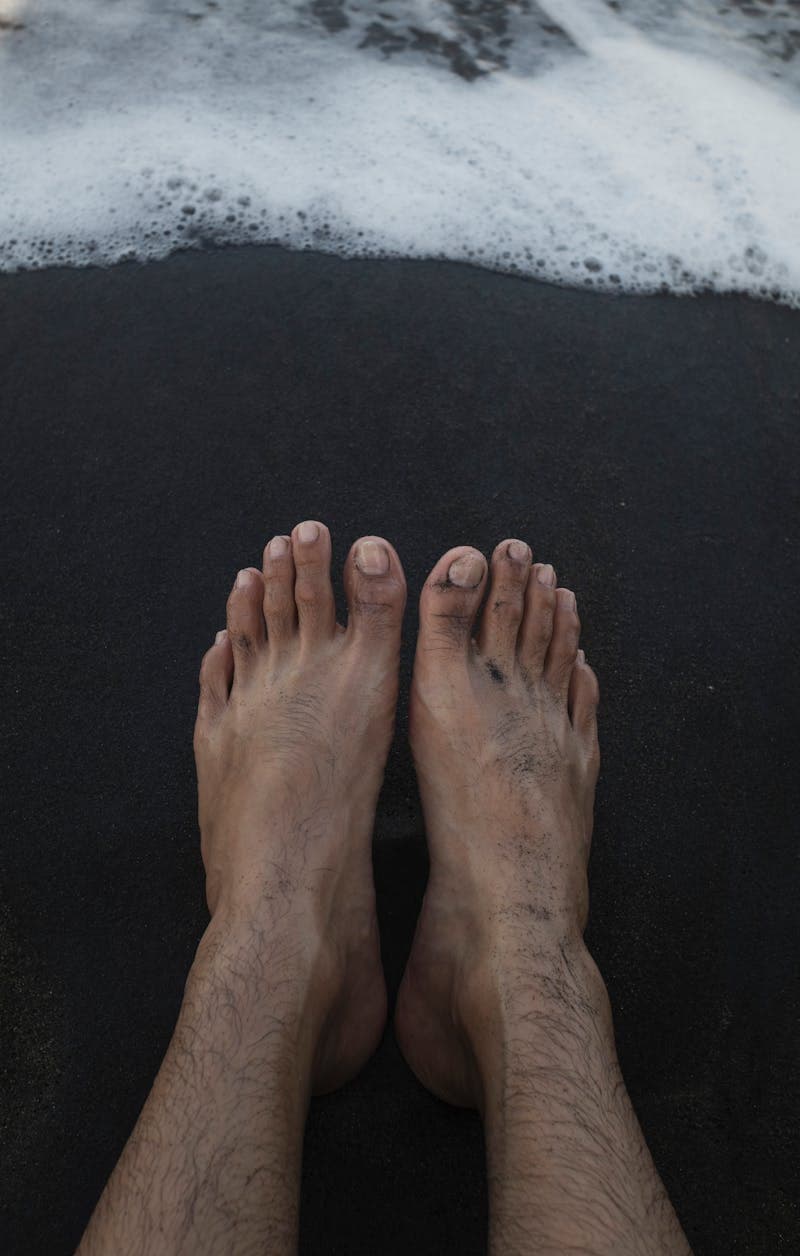
The photo. Stand barefoot on a flat floor and photograph both feet from directly above. Date it. Your eyes adjust to your own feet; a few degrees a year is invisible day to day.
The angle. A straight big toe continues the line of the foot; one that visibly points at the second toe is drifting. You don't need a number, only whether next quarter's photo shows more lean.
The shoe mark. After a normal day, a red mark or shiny patch over the joint means that shoe rubs the bump on every step. Note which shoes leave one.
The bend. Foot in your lap, pull the big toe upward. It should bend 60 degrees or more without pain. Less means the joint is stiffening alongside the drift; the big-toe stiffness guide covers that.
Check both feet. One side usually leads.
What slows it and what eases the pain
None of this straightens the toe. All of it changes the load on the joint, which decides how fast the angle grows and how much it hurts.
1. Wide toe box, flat and flexible sole
The single largest lever. Room for the big toe to sit straight without pressure on the bump, a flat sole so the forefoot isn't pitched into the toe box, and enough flex to bend at the ball of the foot. One that gets the shape right: the Kuru Atom review.
2. Toe spacers at home
Silicone separators worn 20 minutes once or twice a day give the crowded joint a rest and keep the soft tissue from tightening around the drifted position. They ease symptoms; they don't correct the angle, and no spacer will. Our Yoga Toes review covers fit and wear time.
3. A pad or sleeve for the bump
A gel bunion sleeve or moleskin pad stops the shoe rubbing the skin raw. Cheap, and it works for the redness and the bursa.
4. Keep the joint moving
A bunion tends to steal big-toe range. The movement routine keeps the joint bending through the range it still has, which protects push-off.
5. Strengthen the foot
Weak foot muscles let the arch collapse and the toe drift under load. The strength routine targets them. The effect shows in the quarterly photo over a year, not a month.
6. An insole if flat feet are driving it
If the arch collapses inward on every step, a supportive insole shifts load off the inside of the joint. Start over-the-counter; a podiatrist can move you to custom orthotics if that doesn't hold. A worn-down inner heel edge on your shoes is the tell that pronation is part of your picture.
When to see a podiatrist
Book a visit when:
- The quarterly photo shows clear progression over a year.
- The joint hurts on push-off in daily walking, not just after a long day.
- The second toe is starting to lift, overlap, or curl.
- The skin over the bump is breaking down, or you have diabetes and any wound there.
What the podiatrist adds: an X-ray to measure the angle between the big toe and its metatarsal, which turns "it looks worse" into a number you can track; custom orthotics; and an injection into the inflamed bursa when the swelling won't settle. Bring the doctor-prep checklist and your dated photos.
Urgent: sudden severe pain, heat, and redness in the big toe joint that came on overnight is a different problem. That pattern points to gout or infection, not a bunion, and needs a doctor promptly, the same day if you have a fever.
When surgery is the honest answer
Surgery is for pain and function, not appearance. NHS guidance says it's offered when the bunion causes severe pain or affects daily activities, not to improve how the foot looks.
The threshold:
- Pain that limits daily walking despite six months of correct shoes and care. That's the point where "keep managing it" stops being the answer.
- The second toe being pushed out of place. Once the big toe is deforming its neighbor, the problem compounds.
- Skin breakdown over the bump. A recurring open wound over the joint is a surgical indication on its own.
What to know going in: there are many procedures (MedlinePlus counts more than 100). Recovery is measured in weeks to months. NHS figures: at least 2 weeks of rest, no driving for 6 to 8 weeks, 2 to 12 weeks off work, and 3 to 6 months before sport. Bunions sometimes come back after surgery, and the toe can end up stiffer or weaker. None of that argues against surgery when it's the right call; it argues for deciding on function.
What doesn't work, or works less than you'd think
- Bunion "correctors" and splints sold as cures. A night splint holds the toe straight while you sleep. It doesn't shift bone; the correction is gone once you stand up.
- Taping to straighten the toe. Tape can reduce rubbing for a day. It can't overpower the tendons pulling the toe off line.
- Forcing the toe. Cranking it back by hand, or wearing a spacer wide enough to hurt, inflames the joint for nothing.
- Ignoring it because it doesn't hurt yet. The painless stage is where shoes and strength work do the most. Waiting for pain means starting a stage later with less to gain.
Bottom line
A bunion is a structural drift you can slow but not reverse without surgery. Take the photo every three months, drop every shoe that leaves a mark, wear spacers for symptoms, and keep the joint moving and the foot strong. If pain limits daily walking after six months of that, or the second toe is being pushed aside, get the X-ray and talk surgery on the basis of function.
Not sure what you're dealing with? Run the 5-minute self-check. For how the drift plays out above the ankle, see why toe alignment affects knees and hips.