Foot and Calf Cramps at Night: Why They Happen After 40 and What Stops Them
You're asleep, and then you're not. The calf has locked into a hard knot, or the arch has curled and the toes are pulling toward the floor. You're up with your weight on it before you're awake, and the muscle stays sore into the morning.
Past 40 this is common enough that it barely counts as a condition. Up to 60 percent of adults report having had night cramps, and the rate climbs with age. Most of the time it's mechanical: a calf and plantar fascia shortened by decades of shoes and chairs, then held toes-down under a sheet for seven hours. The evidence for most popular fixes is thin, so this guide says what's supported and what isn't.
It covers why cramps rise after 40, what's likely driving yours, what to do at 2 a.m. and at 10 p.m., what the trials say, and when to book a visit. If your feet hurt by day too, the 5-minute self-check shows whether the cramps are part of a bigger pattern.
What a night cramp is, and why 40 changes things
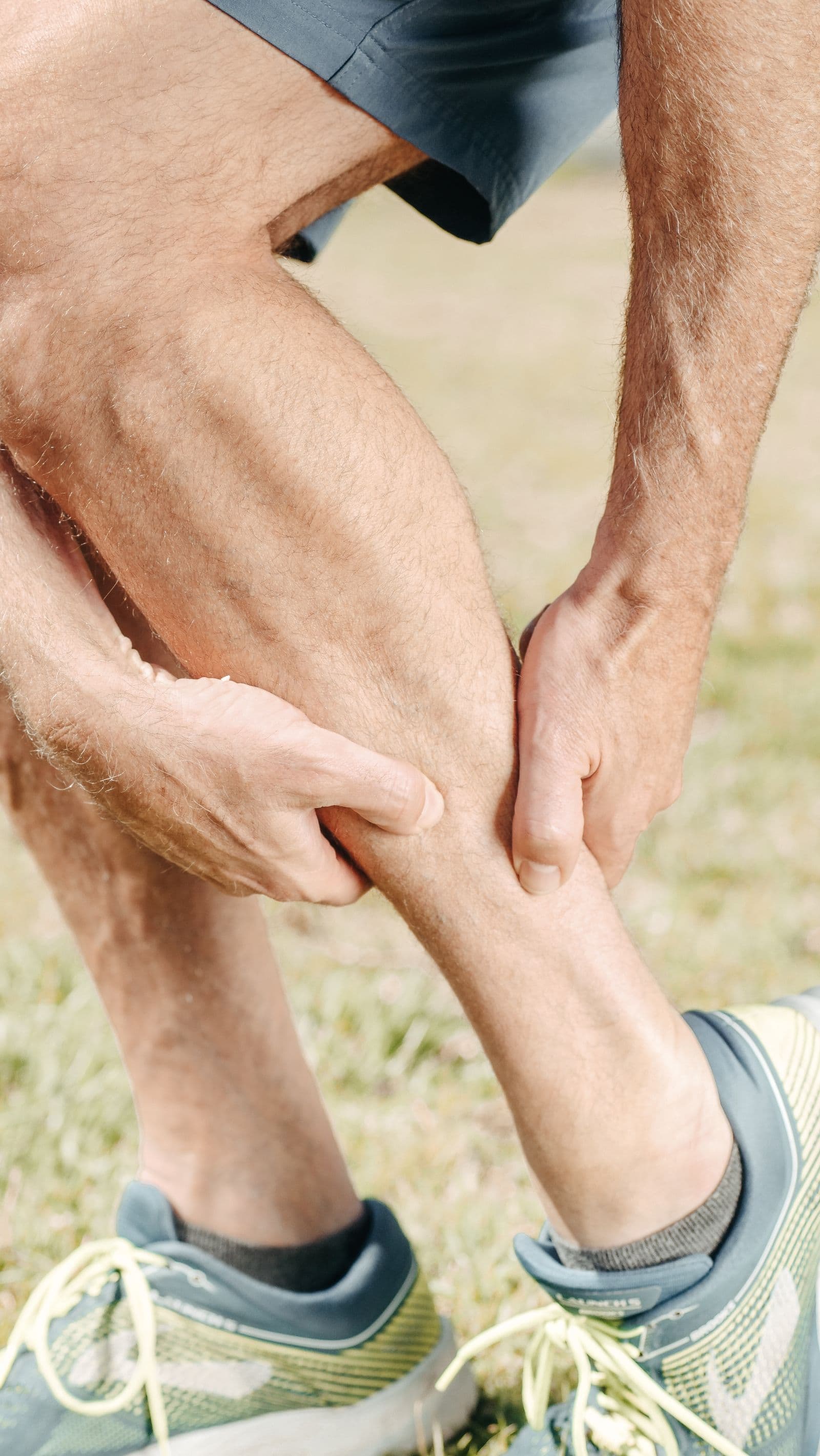
A nocturnal leg cramp is a sudden, involuntary contraction of a muscle, usually the calf, sometimes the sole of the foot or the toes. It lasts from a few seconds to about ten minutes, and the soreness can last up to a day. It's a muscle firing when nobody asked it to.
Three things stack after 40.
- The calf and plantar fascia are shorter than they were. Decades of heeled shoes and sitting with the foot pointed leave the calf shortened most of the day (why your feet hurt after 40 covers the daytime side), and a muscle with no slack cramps more easily. The plantar fascia goes the same way, which is why the arch and calf cramp on the same nights.
- Less muscle, twitchier nerves. Muscle mass declines from your 30s on unless you train against it, and the motor nerves driving the calf become more excitable with age. A smaller, tired calf needs less of a nudge to contract on its own.
- Bed points your toes down. On your back under a tucked sheet, or on your stomach, the foot rests toes-down with the calf at its shortest for hours. This is the piece you can change tonight.
The self-check: what's pulling the trigger
Age sets the baseline. Something usually sets it off. Check this list against the nights you cramped.
- An unusual day on your feet. A long shift standing, an airport, a hike, new shoes. Cramps often come the night after, not the night of.
- Fluid loss. Heavy sweating, a hot day, a long run, and not enough water to cover it.
- Alcohol in the evening. It dehydrates and disrupts sleep, and cramps cluster on the nights it's involved.
- A medication. Diuretics (water pills) and statins are the two most often named, with some asthma inhalers and a few others on the list, though the evidence for any single drug is thinner than the folklore. If cramps started within weeks of a new prescription or dose change, raise it with your prescriber. Don't stop anything on your own; a swap or a timing change is their call.
- A condition that affects nerves or blood flow. Diabetes, kidney disease, thyroid problems, liver disease, and peripheral artery disease (narrowed arteries in the legs) all raise cramp frequency. If you have one and the cramps are new, mention it at your next visit.
What to do
1. In the moment
Get up and put weight on the leg; standing usually breaks the contraction faster than anything you can do lying down. If you can't stand yet, pull the toes toward the shin and hold until the muscle lets go, then walk for a minute. Heat after, not ice, for the soreness.
2. The two-minute bedtime stretch
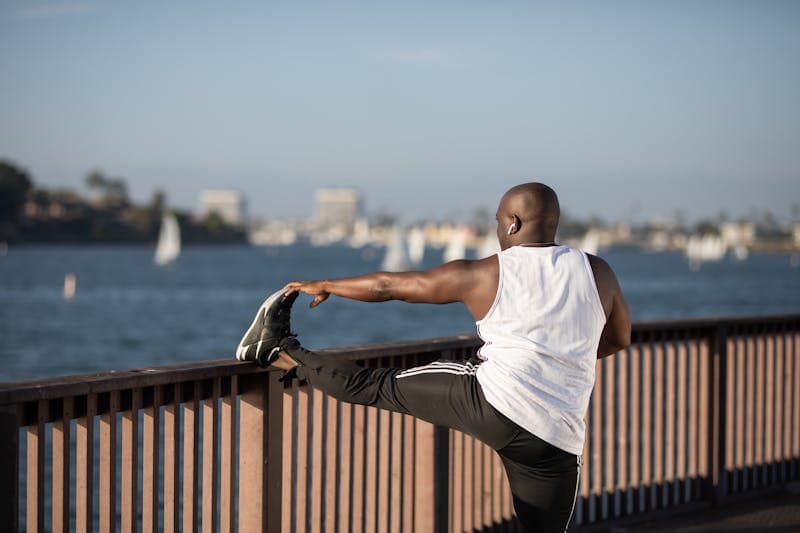
- Wall calf stretch, straight knee. Hands on the wall, back leg straight, heel down. 30 seconds each side.
- Wall calf stretch, bent knee. Same position, back knee bent slightly, heel down. This hits the lower calf (soleus), the tighter one in men who sit for a living. 30 seconds each side.
- Towel stretch for the sole. Sit on the bed, loop a towel around the ball of the foot, pull the toes toward you. 30 seconds each side. It's the same tissue the plantar fasciitis guide works by day.
- Ankle circles. Ten each way, each foot.
The recovery routine has the same work with extras. Do either, every night, for four weeks before judging it.
3. Fix the bed
Loosen the covers at the foot of the bed so the sheet isn't pinning your toes down, or sleep on your side with the knees slightly bent. On your back, a pillow under the knees takes tension off the calf. The goal is a foot that isn't pointed all night.
4. Hydrate through the day, not at bedtime
A glass of water at 11 p.m. does nothing for a cramp at 2 a.m. except get you up at 3. Spread fluid across the day, more when you sweat.
5. Track it for two weeks
Each morning, note cramp or no cramp, which muscle, and what the previous day looked like (standing, exercise, alcohol, water). Two weeks of this shows the pattern, and it's what a doctor wants to see.
What the evidence says
- Stretching before bed has modest support. The trials are small and the reviews call the evidence limited, but it has no downside and the family-medicine guidance is to try it first. Expect fewer and milder cramps, not zero.
- Magnesium has not held up. A 2020 Cochrane review of older adults with ordinary cramps found the difference between magnesium and placebo small and not statistically significant, and concluded it's unlikely to provide meaningful prevention. Outside a confirmed deficiency, it mostly delivers diarrhea.
- Quinine was the standard prescription. It reduces cramps a little, but the FDA concluded in 2010 that the risk of serious harm outweighs the modest benefit, and it's no longer recommended for cramps.
When to see a doctor
Most night cramps are mechanical and don't need a visit. These do:
- Swelling, warmth, or tenderness in one calf. This can be a blood clot (deep vein thrombosis) and is urgent: same-day care.
- Weakness, numbness, or tingling in the foot or leg alongside the cramps.
- Cramps that began within weeks of a new medication or dose change.
- Visible muscle wasting, or a calf that's getting thinner.
- Calf pain when you walk that stops when you rest. That pattern (claudication) points to circulation, not a tight muscle, and needs a visit within the month.
- Cramps most nights after four weeks of the protocol, or any cramp longer than ten minutes.
Bring the two-week log and the doctor-prep checklist so the visit runs on the pattern, not on memory.
What works less than you'd think
- Pickle juice. The evidence is a lab study on cramps triggered on purpose, with a reflex in the throat as the proposed mechanism. At best it shortens a cramp already under way.
- Bananas alone. Low potassium is a real cause, but it's uncommon on a normal diet, and a banana at dinner doesn't change what a shortened calf does at 2 a.m.
- Soap under the sheets. No mechanism, no trial. If it seems to work, credit the covers you loosened while placing it.
- "Just rest." Rest doesn't lengthen a calf; it's the same tissue in the same position the next night.
Bottom line
A calf or arch cramp that wakes you after 40 is common, mostly mechanical, and mostly a shortened calf held toes-down for hours. The fix with the best support is boring: two minutes of stretching before bed, covers loosened, fluid through the day, and a two-week log. Give it two to four weeks before you judge it.
Magnesium and quinine are out. Swelling in one calf, weakness, or a walk-and-rest pattern is a doctor visit, not a stretching problem. If you run, runners over 40 foot pain covers the load side of the same calf.