
Numbness and Tingling in the Feet: Nerve, Shoe, or Something Upstream
You notice it at your desk: the outside of one foot has gone quiet. Or it's a low buzz in both feet at night that wasn't there a year ago.
Numbness, pins and needles, and burning in the feet are nerve symptoms, and in men over 40 they have a short list of common causes. Four cover most cases: a shoe pressing on a nerve, a nerve trapped inside the foot, a nerve pinched in the lower back, and peripheral neuropathy. They need different fixes, and one of them needs a doctor this week.
This piece covers the four causes, a five-question self-check to narrow it down, what to do for each, and the signs that mean you book the appointment. If pain is the bigger issue, why your feet hurt after 40 covers that; the 5-minute self-check covers numbness alongside the pain patterns.
The four causes, and how each one shows up
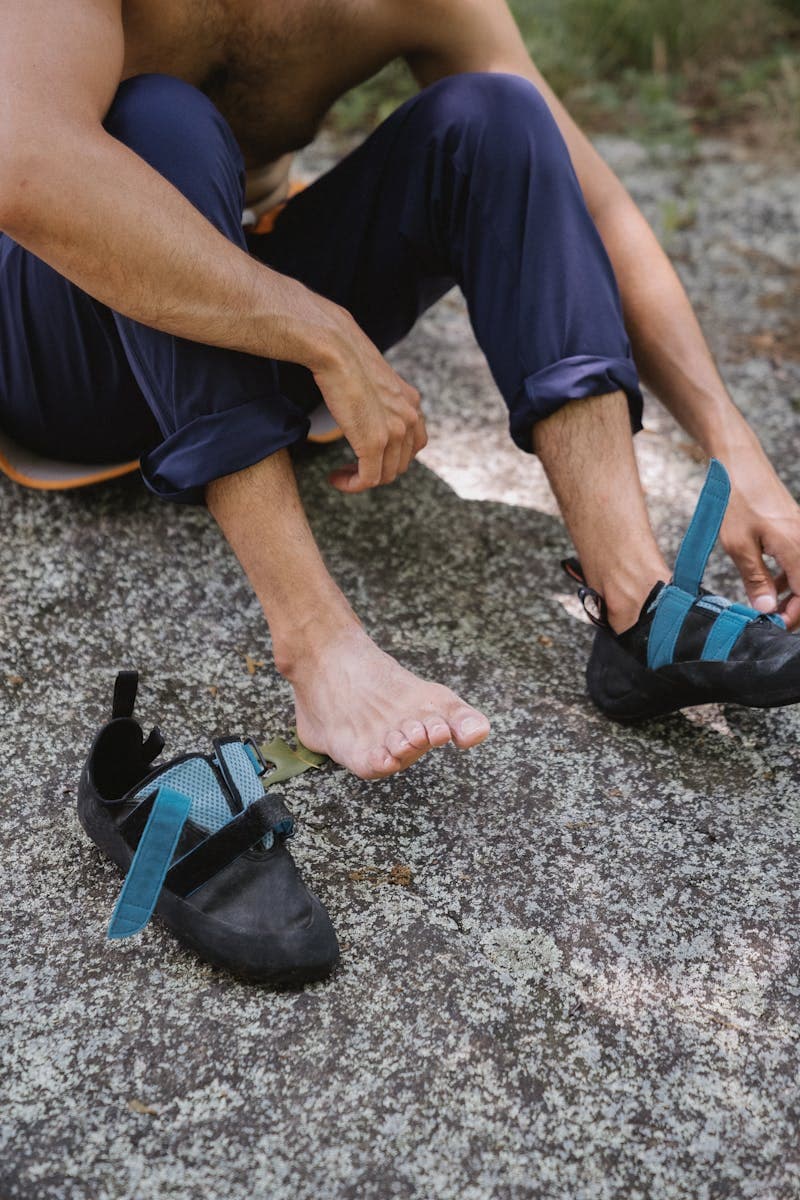
A shoe or lace pressing on a nerve. The nerves that supply the top of the foot and the toes run just under the skin, and a tight lace knot, a stiff tongue, or a narrow toe box can press one of them all day. The pattern: numbness on the top of the foot or in one or two toes, worse in a specific pair of shoes, gone by morning. If the tingling started when the new shoes did, that's the cause until proven otherwise. The dress-shoes guide covers the work-shoe version.
A nerve trapped inside the foot. The first common site is a thickened nerve between the third and fourth toes (Morton's neuroma): a pebble or folded-sock feeling under the ball of the foot, with burning or tingling into those two toes, worse in narrow shoes and better once they're off. The ball-of-foot guide sorts it from plain forefoot overload. The second site is the inside of the ankle, where the nerve to the sole passes under a band of tissue (tarsal tunnel syndrome). That one tingles or burns along the sole, worse with standing and walking, sometimes worse at night.
A pinched nerve in the lower back. A bulging disc or a narrowed spinal canal can press a nerve root, and you feel it at the far end of that nerve, in the foot. The pattern: one side only, often the outer foot or the big toe, usually with back or buttock pain, and it changes with position. Sitting, bending, or a long drive changes it in a way shoes never do. The leg-pain version is sciatica; the foot numbness is the same problem further down the wire.
Peripheral neuropathy. Both feet, starting in the toes, creeping up over months in a stocking pattern, the same on both sides. Numbness first, then tingling or burning. Diabetes is the most common cause. Alcohol, low vitamin B12, thyroid problems, some medications, and chemotherapy are the other common ones. It affects somewhere between 1 and 7 percent of the general population, more after 50, and 25 to 50 percent of people with diabetes.
The five-question self-check
Shoes off, then answer these.
- One foot or both? One foot points at a shoe, a local nerve, or the back. Both feet, symmetric, points at neuropathy.
- Which toes, or which patch? Third and fourth toes together: neuroma. Sole and inside of the ankle: tarsal tunnel. Top of the foot or a single toe: shoe. Outer foot or big toe with leg symptoms: back. All the toes on both feet: neuropathy.
- Does it change with shoes, position, or time of day? Better barefoot: shoe or neuroma. Better lying down, worse sitting or bending: back. Worse after a long stand: tarsal tunnel. Same all day regardless: neuropathy.
- Any weakness, balance trouble, or skin change? Tripping over your own foot, a foot that slaps when you walk, unsteadiness in the dark, or skin that's gone shiny, dry, or discolored. Any of these moves you straight to the doctor section.
- Any back or buttock pain? Now or in the last few months, on the same side as the numb foot. If yes, the back is in play even if the pain is mild.
Write the answers down; they're most of what a clinician wants to know.
What to do for each one
If it's the shoe
Change the shoe, not the foot. Re-lace first: skip the eyelet over the spot that tingles. Then widen the forefoot with a genuinely wide toe box (the KURU Atom review covers one option).
Give it two weeks. Numbness from pressure usually settles within days once the pressure is gone; if nothing has shifted after two weeks in a better shoe, the shoe wasn't the cause and you move down the list.
If it's a neuroma or tarsal tunnel
For a neuroma: a wide toe box plus a metatarsal pad placed just behind the ball of the foot. The placement protocol is in the ball-of-foot guide. Honest timeline: shoe and pad changes bring relief for about half of people, and a podiatrist won't usually discuss an injection or surgery until you've given conservative care 3 to 6 months.
For tarsal tunnel: a clinician needs to confirm it, since the same symptoms can come from the back or from neuropathy. Meanwhile, cut the long standing shifts that light it up and keep the ankle moving through its full range. The movement routine covers the ankle and forefoot work.
If it's coming from the back
This guide can't treat it and won't pretend to. The fix for a pinched nerve root is a clinician's exam, sometimes imaging, and a rehab plan for the back, not the foot. What the visit is for: confirming which nerve is involved, checking strength and reflexes in the leg, and ruling out the emergency version below. Most disc-related nerve pain settles over weeks with the right plan.
If it's neuropathy
A doctor's workup this month, not eventually. A standard first pass is bloodwork: a blood count, a metabolic panel, fasting glucose, thyroid, and vitamin B12. The workup exists to find the cause, because that's what gets treated. Nerves recover slowly and sometimes only partly, so the win is stopping the progression early. If the workup turns up diabetes, the diabetic foot care rules apply from that day: daily foot checks, no barefoot walking, and a low bar for getting a wound looked at.
When to see a doctor this week
- Both feet with balance loss or a fall. Neuropathy that's reached the balance system is past wait-and-see.
- Numbness with weakness or a foot that drops. A foot you can't lift at the ankle, or one that slaps when you walk, means a motor nerve is involved.
- Numbness that started after an injury. Nerves and bones get checked together.
- Numbness with a wound you can't feel. A cut, a blister, or a sore you found by looking rather than by feeling needs a clinician now.
- Diabetes plus new numbness. No self-check required. Call.
Bring the doctor-prep checklist so the visit starts from your five answers.
Go to the ER now if: numbness in the groin, buttocks, or inner thighs shows up with any change in bladder or bowel control, or sudden numbness comes with new weakness in a leg. That pattern (cauda equina syndrome) is a surgical emergency, and the outcome depends on how fast the pressure comes off the nerves.
What doesn't work, or works less than you'd think
B vitamins without a measured deficiency. If your B12 is low, replacing it matters and a doctor will manage it. If it isn't, a supplement does nothing for the nerve and delays the workup that finds the real cause. Test, then treat.
Massage as a cure for nerve compression. It feels good for an hour. It doesn't move the disc, widen the shoe, or shrink the neuroma. Fine as comfort, not as a plan.
Ignoring it because it doesn't hurt. Wounds that go unfelt are how diabetic foot problems turn into amputations, and the earliest, most fixable stage of neuropathy is the painless one.
"Circulation" gadgets. Foot massagers, electrical pads, and compression sleeves sold as circulation boosters. Numbness from a nerve is not a blood-flow problem, and no gadget reaches a disc or a neuroma.
Bottom line
Numb or tingling feet come from four places: the shoe, a nerve trapped in the foot, a nerve pinched in the back, or neuropathy in both feet. One foot that's better barefoot is a shoe or a local nerve, and a two-week shoe change is the test. One foot with back pain and position changes is the back, and a clinician sorts that out. Both feet, starting in the toes and creeping upward, is neuropathy, and that needs bloodwork this month.
Not sure where you land? Start with the 5-minute self-check.