Cold Feet and Poor Circulation: Nerve, Artery, or Just Cold
Your feet are cold in bed again, under a blanket, in a room that isn't cold. Or one foot has run cooler than the other for a month and you've started checking it with your hand.
Cold feet in a man over 40 come from one of three places: not enough blood reaching the foot, a nerve reporting cold that isn't there, or a foot losing heat faster than it makes it. The first is the one that matters, and one check with the back of your hand separates it from the other two.
This guide covers that check, peripheral artery disease and the 15-minute test that settles it, Raynaud's and the other causes, what helps, and the signs that mean today rather than next month. If your feet hurt more than they're cold, the 5-minute self-check sorts the pain patterns.
The first test: touch them
Cold to the touch. Back of your hand on the top of one foot, then the other, then your shin. A foot colder than the shin is getting less warm blood than the leg above it, from the room or from an artery. Note which foot: one foot cooler than the other on a warm evening is the most useful observation you can bring to a doctor.
Feel cold, but warm to the hand. Your feet say ice; your hand says they're the same temperature as the rest of you. That's a nerve reporting a sensation that isn't there, and it has a pattern: both feet, toes first, creeping upward over months, often with tingling or numb patches. Diabetes is the most common cause. The workup is bloodwork, not a circulation test, and numbness and tingling in the feet covers it.
Both feet cold to the touch in a cold room. Usually the room. Fix the cheap things under "what helps" and see what's left.
Peripheral artery disease: the one to rule out
PAD is plaque in the leg arteries, the same process that narrows the arteries of the heart. Estimates put it between 8 and 10 million Americans over 40. The men most likely to have it: smokers and ex-smokers, men with diabetes, and men with high blood pressure or high cholesterol. Three or more of those together raises the risk roughly tenfold, which is why a cold foot in a man over 50 gets checked rather than warmed.
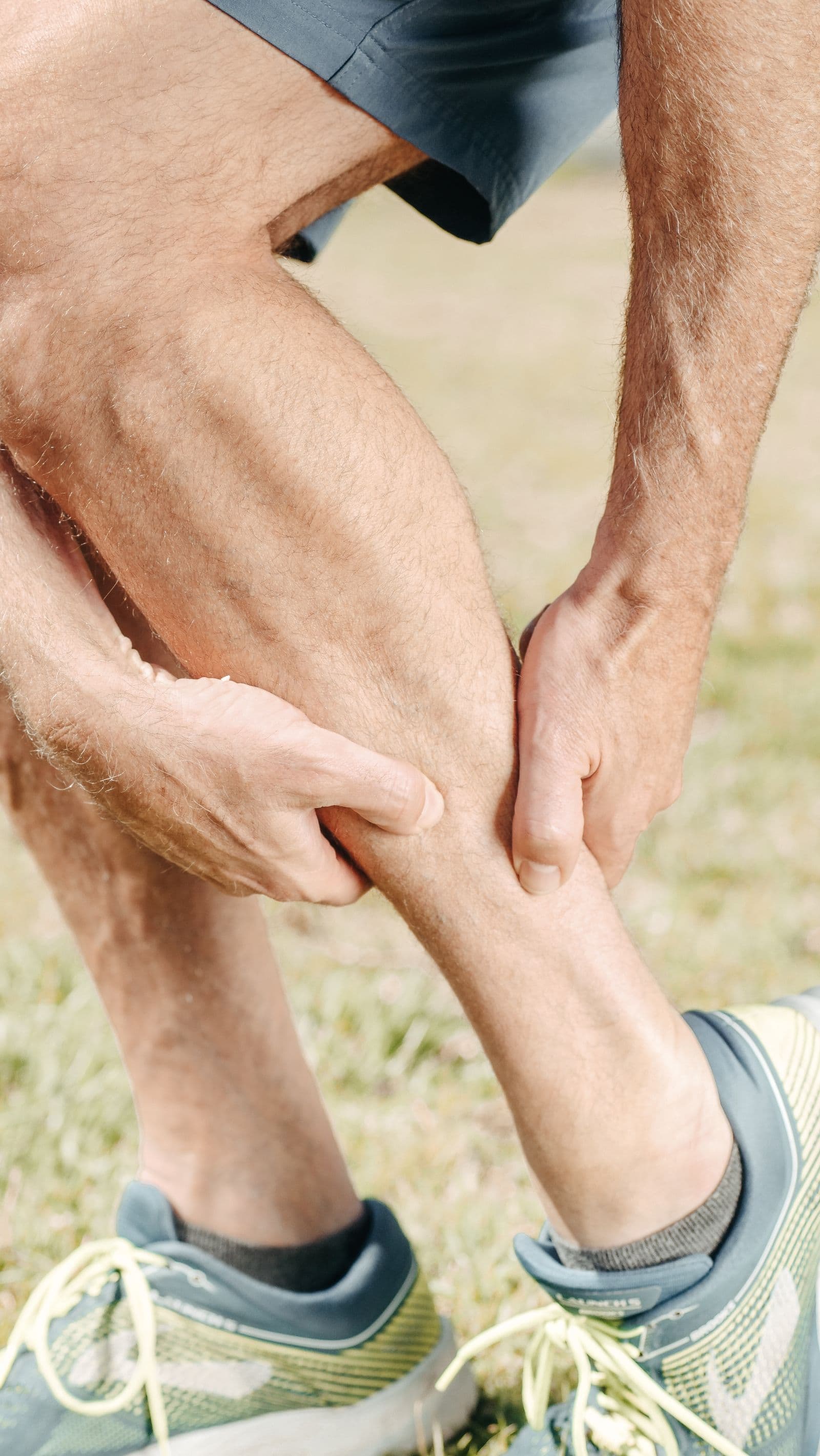
Claudication. The classic sign is a cramp, ache, or heaviness in the calf (sometimes the thigh or buttock) that starts after a predictable distance of walking and stops within a few minutes of standing still. It comes back at the same distance next time, and that predictability separates it from a pulled muscle or a nighttime cramp, a different problem covered in foot and calf cramps at night. Don't wait for it, though: depending on the study, only somewhere between one in ten and one in four people with PAD get the textbook pattern. The rest have leg symptoms that don't fit, or none.
The skin. Blood flow is what grows hair and nails. Shiny, thin, hairless skin on the shins and toes, toenails that seem to have stopped growing, and a foot that goes pale when raised and dusky red when it hangs down mean the supply has been low for a while. Compare the two legs; the difference is often one-sided.
The pulses. A clinician feels two on each foot, on top and behind the inside ankle bone. Weak or absent pulses on one side turn a "probably nothing" visit into a test.
A sore that won't heal. A small, punched-out wound on a toe or a pressure point that hasn't closed in two weeks. Low flow can't deliver what a wound needs.
The test. The ankle-brachial index, or ABI. A technician puts blood pressure cuffs on your ankles and arms, listens with a small Doppler probe, and divides ankle pressure by arm pressure. Around 1.0 is normal, below about 0.9 suggests PAD, below about 0.4 is severe. It takes 10 to 20 minutes, involves no needles, and is done in an outpatient lab. If you fit the profile and your feet are cold to the touch, ask your primary care doctor for it by name.
Raynaud's: color changes, and the fingers too
Raynaud's is the small vessels in the toes and fingers clamping shut in response to cold or stress. The tell is color: the toes go white, then blue and numb, then flush red and throb as blood returns, over minutes. Cold feet without that sequence are probably not Raynaud's. Fingers are usually involved.
Most Raynaud's is primary, with no underlying cause, and is managed by staying warm and not smoking. Some is secondary to autoimmune conditions, certain thyroid disorders, or medications for blood pressure, migraine, or ADHD. Raynaud's that starts after 40, on one side only, or with sores on the fingertips is more likely the secondary kind and is worth a visit.
Everything else that makes feet cold
Hypothyroidism. A slow thyroid lowers heat production. Feeling cold when nobody else does, plus fatigue, constipation, and dry skin. A TSH blood test answers it.
Anemia. Fewer red cells, less oxygen reaching the extremities. Cold hands and feet, fatigue, and pale skin are the common signs. A blood count answers it.
Medications. Beta blockers, common for blood pressure and heart rhythm, reduce blood flow to the hands and feet in some men. Migraine drugs and ADHD stimulants can do the same. Don't stop any of them on your own; ask whether a different drug would do the job.
Low body fat. Lean men lose heat faster, and the feet go first.
The house and the socks. A cold floor, a drafty bedroom, cotton socks that hold sweat against the skin, shoes that never dry out. Damp skin loses heat far faster than dry skin.
What helps, in order
Stop smoking. Nothing else comes close. Smoking is the single strongest risk factor for PAD, and it triggers Raynaud's.
Walk into the claudication. This sounds backward and is the treatment. A Cochrane review of 32 trials found exercise programs improved pain-free walking distance by roughly 80 meters and maximum distance by roughly 120 meters. The blockage doesn't shrink; the muscle gets better at using what arrives, and small side vessels open. The protocol: walk until the calf pain is mild to moderate, stand until it eases, walk again, for 30 to 45 minutes, three times a week, for at least 12 weeks. Ask about a supervised program; loose advice to walk more didn't work.
Control the numbers. Blood pressure, cholesterol, and blood sugar are the other levers. PAD means the same plaque is likely in the heart and neck arteries, so a diagnosis usually comes with a statin and an antiplatelet drug alongside the walking.
Wool socks and dry feet. Merino or a wool blend, changed midday if you sweat, and feet dried between the toes after every shower.
No heat on feet that can't feel heat. With neuropathy or diabetes, a heating pad or hot water bottle can burn skin that never reports the burn. Socks in bed instead. The diabetic foot care guide has the full rule set.
No tight tops. Socks that leave a ring around the calf are pressing on the veins that return blood. Loose-top socks.
What to do this week
- Do the touch test tonight. Both feet, then the shin. Write down which foot, and whether it's cold or only feels cold.
- Look at the skin. Hair on the toes and shins, nail growth since your last trim, the color of each foot raised for a minute and then hanging down.
- Walk a known distance at your normal pace. Note whether a calf starts to ache, where, and whether standing still fixes it.
- Check your medication list for beta blockers, migraine drugs, and stimulants.
- Book the visit if you're over 50 with any risk factor and the feet are cold to the touch, or if anything showed up in steps 2 and 3. Ask for an ankle-brachial index and bring the doctor-prep checklist with your notes.
- Fix the cheap causes meanwhile. Wool socks, dry feet, a warm floor, a second pair of shoes.
When it's not a wait-and-see
- One foot suddenly cold, pale, painful, and numb or weak. An artery has blocked. Call 911. The window for saving the leg is measured in hours.
- Pain in the foot or toes at night that eases when you hang the foot off the bed. Rest pain is severe PAD and needs a vascular referral in days, not weeks.
- A wound or ulcer on a toe or foot that hasn't healed in two weeks.
- Black or blue toes, with or without pain.
- Diabetes plus any foot wound, however small.
- Raynaud's with sores on the fingertips or toes, or Raynaud's on one side only.
Bottom line
Touch your feet. Cold to the hand, one foot more than the other, and you're over 50, smoke, or have diabetes, high blood pressure, or high cholesterol: that's a 15-minute ABI test at your primary care office, and treatment starts with quitting and a walking program. Color changes with the fingers involved: Raynaud's, and staying warm unless it's new or one-sided. Feet that feel cold but are warm to the hand aren't a circulation problem, they're a nerve problem, and the next page is numbness and tingling in the feet.