Hammer Toes and Curled Toes: What Straightens, What Doesn't, and the Shoe Fix
The second toe has a knuckle now. It rides up, rubs the top of your work shoes, and has grown a hard spot of skin there. That is a hammer toe, and it has two stages: flexible, when you can push it straight with a finger, and rigid, when the joint has set and only surgery changes the angle.
Shoes, pads, and toe exercises do real work on a flexible toe. On a rigid one they stop the rubbing but don't move the joint. If the curling toe sits next to a bunion, read this with the bunions guide.
What a hammer toe is
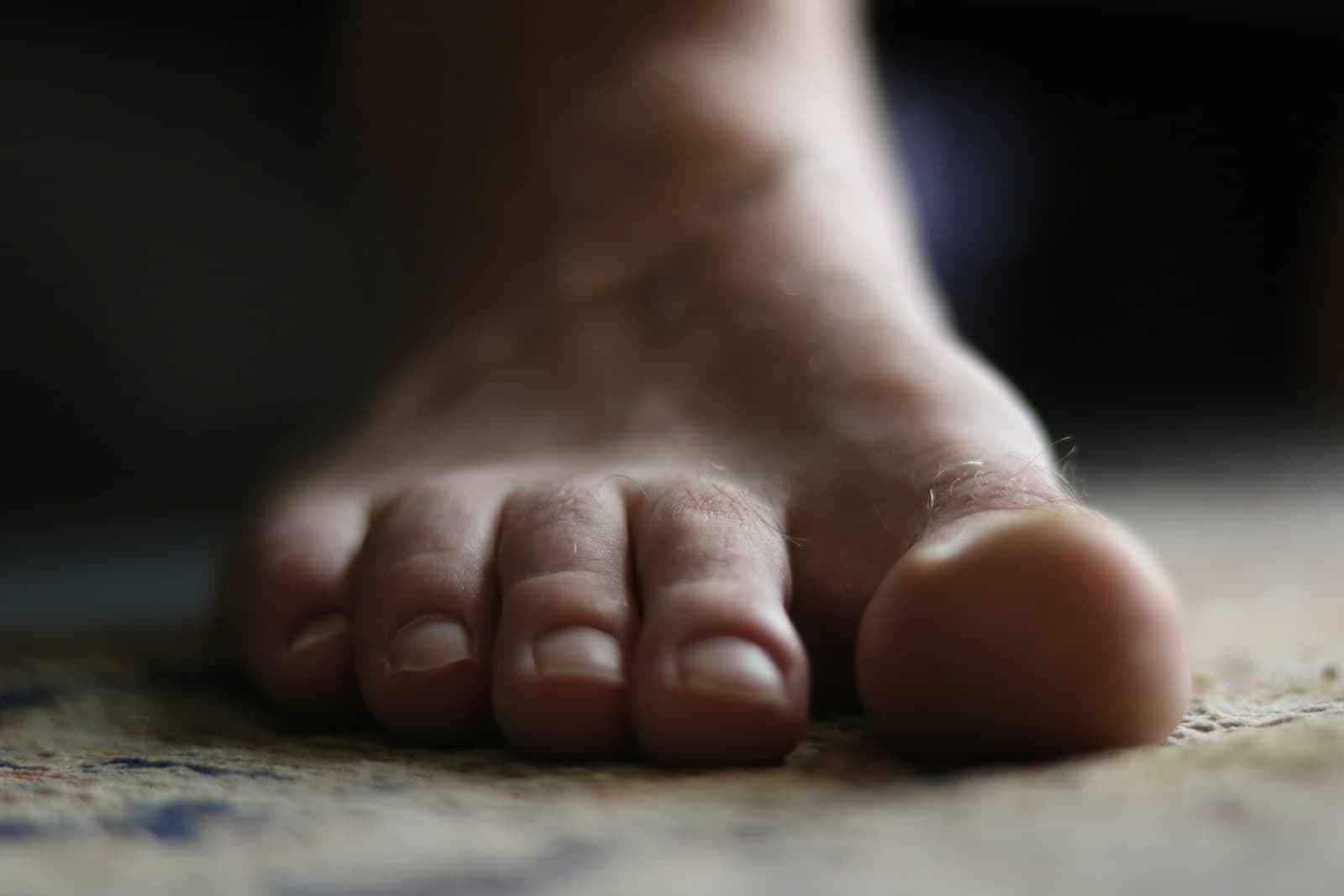
Each small toe has three joints: base, middle, and end. In a hammer toe the middle joint bends, so the knuckle rises and the tip is driven toward the floor.
The mechanism. Long tendons from the shin and calf pull on the tip; small muscles inside the foot steady the base and are weaker. When the small muscles lose ground, from age, disuse, or nerve damage, the long tendons win and the toe buckles in the middle. Held bent long enough, the tendons and joint capsule shorten around that position and the toe stops coming back.
The cousins. A claw toe bends at both the middle and end joints with the base cocked up, so the toe curls under; it more often comes with nerve problems or a high arch and takes several toes. A mallet toe bends only at the end joint, so the tip points down and the corn forms at the tip. Treatment turns on the same question for all three: do the joints still move.
Why the second toe goes first. In many men it is the longest toe, so it hits the front of the shoe first and folds. Next to a bunion it is also crowded from the side: the big toe drifts under it and the second toe rides up out of the way, while the bone behind it picks up load the big toe stopped carrying. That is why the ball of the foot under it often hurts too.
What causes it, and why after 40
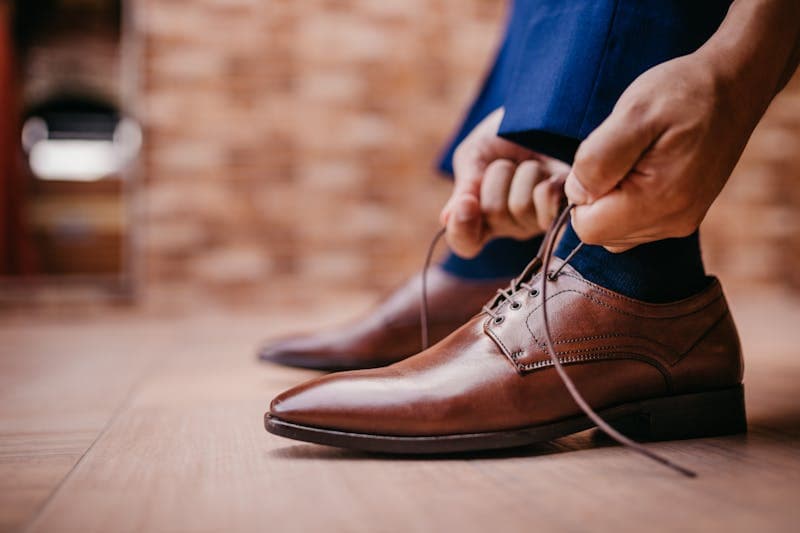
The toe box. Too short jams the tip and folds the toe. Too shallow presses the knuckle down. Dress shoes do both; the dress-shoes guide covers what twenty years of that does to a forefoot.
Muscle imbalance over time. A toe held bent for a workday, five days a week, for decades, remodels. The small foot muscles weaken with age and with years in stiff shoes that do their job for them, and the long tendons don't.
Nerve and joint disease. Neuropathy from diabetes hits the small foot muscles first, which is why diabetics get claw toes. Arthritis loosens the joint and speeds the move from flexible to rigid.
Old trauma and family shape. A toe broken or badly stubbed years ago can heal out of balance. A long second toe, a high arch, or a flat foot all raise the odds, and those run in families.
The one-finger test: flexible or rigid
Sit with the foot across your knee, put one finger on the raised knuckle, and press it down and straight, gently.
Flexible. The toe straightens fully with light pressure and lies flat while you hold it. It curls again when you let go; that is fine.
Rigid. It straightens only partway, springs back stiffly, or doesn't move. The joint has set, and nothing at home changes the angle.
Test all eight small toes. One is often rigid while its neighbors are still flexible.
The corns on top and at the tip
A hammer toe grows corns in two places: on top of the knuckle, where the upper rubs it, and at the tip, where the toe is driven into the insole. A corn is skin thickening against pressure. Pare it, or burn it off with a medicated pad, and the pressure is still there, so it is back in a few weeks. Skip medicated pads: the acid can't tell corn from healthy skin, and in a man with diabetes or poor circulation that is how a sore starts. The calluses and corns guide covers filing and padding. Fix the pressure first and the corn stops coming back.
What helps a flexible hammer toe
The toe box. Deep and wide, with a soft upper. OrthoInfo's rule is half an inch of shoe beyond your longest toe, and for many men that is the second toe, so measure that one.
The heel. An inch or less. The podiatry associations draw the line at two inches; with a toe already curling, lower is better, since heel pitch drives the forefoot forward.
Toe stretches, towel scrunches, marble pick-ups. Hold the toe straight with your fingers for 20 to 30 seconds a few times a day. Scrunch a towel toward you with your toes. Pick marbles up off the floor. Be realistic: they slow the drift and keep a flexible toe flexible. They don't straighten a rigid one, and the trial evidence behind them is thin. The strength routine fits them into five minutes a day.
Gel sleeves and crest pads. A gel sleeve cushions the knuckle from the upper. A crest pad is a small roll under the curled toes that lifts the tips off the insole, the fix for the corn at the tip.
Taping or a splint. A loop of tape pulling the toe toward the sole, or a soft splint, holds a flexible toe flatter while it is on and cuts rubbing during the day. The position is gone when it comes off.
A metatarsal pad when the ball hurts. A dome-shaped pad on the insole just behind the ball of the foot spreads load off the second metatarsal head. If the hammer toe came with a burning spot under it, this is often the change that helps most.
What doesn't work
- "Toe straightener" gimmicks on a rigid toe. A set joint holds whatever the strap allows and returns the moment it is off.
- Tight socks. A snug toe seam or a compression sock over a curled toe presses the knuckle all day. Look for a wide, seamless toe.
- Paring the corn and changing nothing else. The corn is the symptom.
- Waiting for it to hurt. Pain tends to arrive with rigidity, when the home options have the least to offer.
What to do this week
- Run the one-finger test on all eight small toes and note which are flexible.
- Measure your shoes against the longest toe: half an inch beyond it, and a toe box the knuckle doesn't touch.
- Retire or stretch the shoe that leaves a red mark on the knuckle after a day.
- Pad the corn with a non-medicated pad or gel sleeve, plus a crest pad if it is at the tip.
- Start the stretches and towel scrunches, five minutes a day, on every toe that passed the test.
- Photograph both feet from above and date it. If any toe is rigid, or a corn is breaking down, book a podiatrist.
Surgery: when the toe is rigid and it hurts
Surgery is for a toe that is rigid, painful, and in the way: a corn that keeps breaking down, or a toe you can no longer get into a shoe. It is a quality-of-life decision, not a cosmetic one.
What gets done. For a flexible toe that has failed conservative care, the surgeon lengthens the tight tendon or moves it from the bottom of the toe to the top, so it pulls the toe straight instead of curling it. For a rigid toe the middle joint is fused: a small piece of bone comes out, the toe is set straight, and a pin or small implant holds it while the bones knit.
Recovery. Usually outpatient, often under local anesthetic. You walk on the heel in a stiff post-op shoe from the start; no push-off through the toes for several weeks. Expect stiffness, swelling, and redness for four to six weeks. A fused joint doesn't bend afterward, the toe can end up slightly shorter or longer, and recurrence happens. Decide on what the toe stops you doing, not how it looks.
When it's not a wait-and-see
Same-week appointment, same-day where noted, if any apply:
- A corn that has opened into a sore, or has fluid or blood under it. Same day if you have diabetes or poor circulation; the diabetic foot care guide covers why a small break there is not small.
- A red, hot, swollen toe, especially with a fever or redness spreading up the foot. That is infection until proven otherwise.
- Several toes curling over weeks with weakness, numbness, or tingling. That points to a nerve or spinal problem, not a shoe, and needs a doctor.
Bottom line
Press the toe straight with one finger. If it goes, you have a flexible hammer toe, and a deep toe box, a low heel, daily toe work, and a pad on the corn will slow it and stop the rubbing. If it doesn't go, the joint has set: the same shoes and pads handle the pain, and surgery is the only thing that changes the angle. If the ache is under the toe rather than on top of it, read ball of foot pain in men over 40 next.