Keeping Toenail Fungus From Coming Back
You did the year. The nail is clear, the lab test is negative, and you'd like never to think about it again. The uncomfortable fact: somewhere between one in ten and one in two treated nails get reinfected, depending on the study, and the men who get it back are mostly the ones who went straight back to the shoes, socks, and showers that grew it the first time.
Fungus isn't cured out of your life. It's cured out of your nail, and it's still in the world: in the shoes you wore for the year before treatment, on the gym floor, in the family bathroom. Prevention is about not handing it a warm, damp toenail to move back into. None of this is complicated, and all of it is daily.
If the nail isn't clear yet, this guide still applies; every item below also improves the odds of the treatment working. Start with the 12-month protocol for the treatment side, or toenail fungus: what works for the short version of all five guides.
Why it comes back
Three routes, and most recurrences use more than one.
The shoes. Fungus survives in shoes for months. Every pair you wore during the infection is seeded. Put a clean nail into them daily and you're running the experiment again.
The skin. Athlete's foot, often too mild to notice, is the reservoir. Peeling between the fourth and fifth toes, a dry-looking patch on the heel that moisturizer doesn't fix. The nail gets reinfected from its own foot.
Incomplete cure. A nail that looked clear but still carried fungus on the lab test. It wasn't a recurrence; it was the same infection resurfacing. The repeat clipping test at the end of treatment exists to catch this.
How to disinfect shoes (and which to throw out)
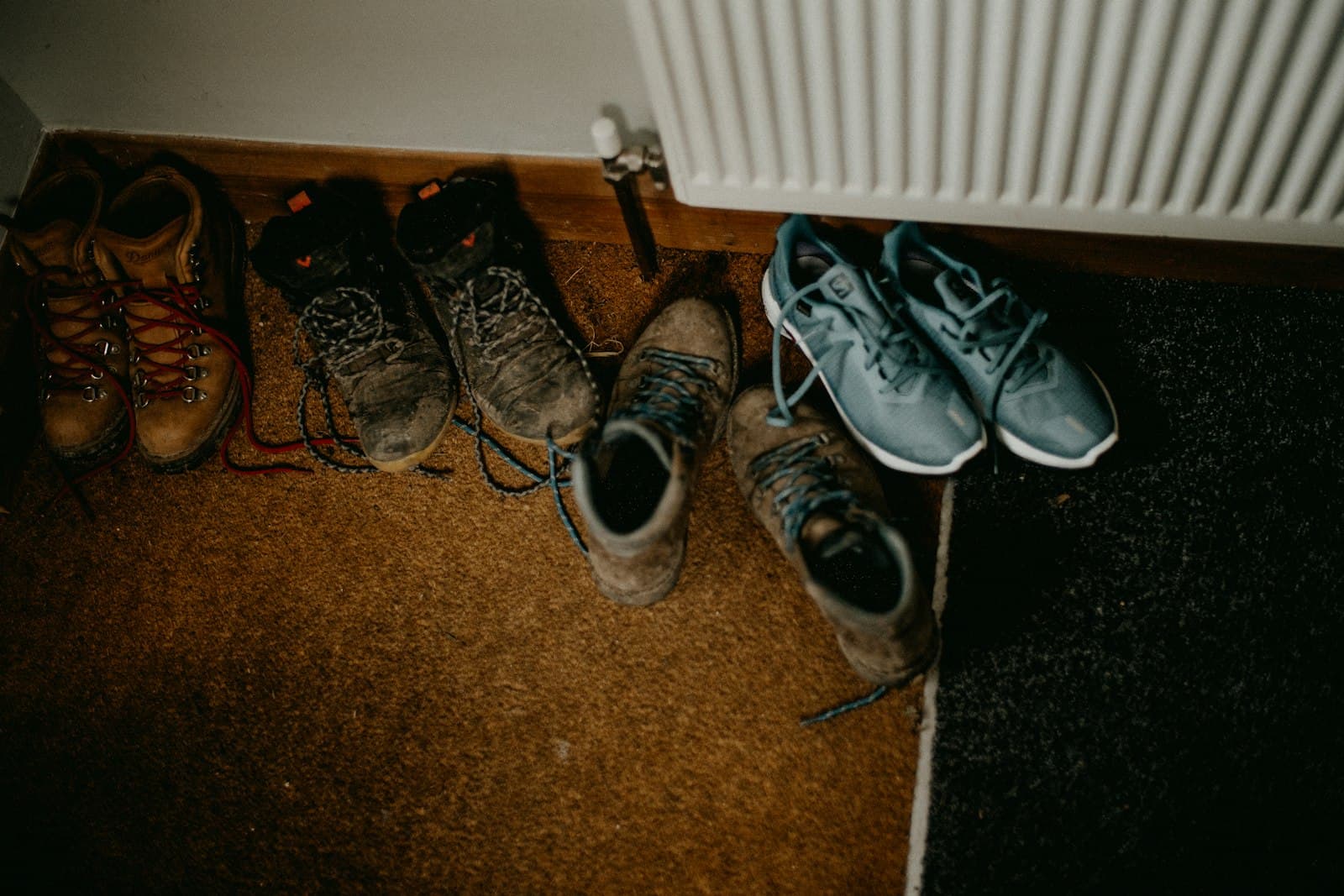
Rotate two pairs. Never the same pair two days running. A shoe takes about 24 hours to dry fully, and fungus needs damp.
Treat every pair you owned during the infection. An antifungal spray or powder into each shoe, weekly for the first couple of months after the cure, then monthly. The ultraviolet shoe sanitizers sold for this do reduce fungal load in lab tests; they're a reasonable add-on, not a substitute for the spray and the rotation.
Retire the worst. Old running shoes, the work boots that never dry, anything with a foam insole that has been damp for a year. Replace insoles at minimum.
Fit. A toe box that presses on the nail causes the micro-injury fungus enters through. The big toe should not touch the end when you're standing. Dress shoes are the usual offender in men over 40.
Sandals when you can. Air is the cheapest antifungal there is.
Socks and feet
Socks that wick. Merino or a synthetic sport sock, not cotton, which holds sweat against the skin. Change them daily, and again after a workout or a hot day.
Dry between the toes. After every shower, with a towel corner or a hair dryer on cool. Thirty seconds. This one habit does more than any product. The nightly routine builds it in with the inspection.
Powder if you sweat. An antifungal foot powder in the socks and shoes for men whose feet stay damp.
Treat the skin at the first sign. Peeling, itch, or a scaly patch: four weeks of athlete's foot cream, the full course, even after it looks better. The athlete's foot guide covers it. This is the reservoir; drain it.
Nails
Trim straight across, monthly, with your own clippers. Clean the clippers with alcohol after use. Don't share them.
Pedicures and nail salons. A known route in both directions: tools that weren't sterilized can give it to you, and while you're infected you can leave it for the next man. If you use a salon, bring your own tools or ask how they sterilize theirs, and skip the shared footbath. A good salon will work on a nail under treatment; many decline an obviously infected one, which is fair.
Keep the nails short and thin. Long, thick nails trap debris and lift at the tip, which is where the fungus gets in. File thickness down as it appears.
Look, monthly. The same daylight photo you took during treatment. A new white or yellow streak at the tip, caught in month one, is a few weeks of topical. Caught in month twelve, it's another year.
The twice-weekly topical
Many podiatrists keep patients on a prescription antifungal lacquer or solution applied once or twice a week for months after a cure, sometimes indefinitely for men with a history of repeat infections, diabetes, or poor circulation. The evidence that it lowers recurrence is reasonable, the cost is modest for a generic like ciclopirox, and the effort is two minutes a week. Ask about it at the final visit; it's the single prevention step with trial data behind it.
Is toenail fungus contagious? Floors, showers, and the household
Yes, weakly. It passes through damp shared floors, towels, and nail tools far more than through touch, and the foot that catches it is usually one that was ready for it: damp, cracked, or already carrying athlete's foot. Between toes on the same foot it spreads readily, which is why one infected nail becomes three.
Gym, pool, hotel shower. Flip-flops or shower shoes. Every time. These floors are where a foot picks it up.
Home bathroom. If anyone else in the house has athlete's foot or a fungal nail, you'll trade it back and forth until everyone treats it. Separate towels, a bath mat that gets washed hot weekly, and the other person treated at the same time.
Towels. Your own, washed hot, and the feet dried last with a corner you don't use on the rest of you.
The men who need to be strictest
Diabetes. A recurrence isn't cosmetic; a thick nail or a break in the skin next to it is how foot ulcers start. Podiatry checks on a schedule and any nail change reported early. The diabetic foot care guide covers the routine.
Poor circulation or a weakened immune system. Slower nail growth, slower clearance, higher recurrence. The twice-weekly topical is worth asking about.
Runners and hikers. Repeated nail trauma is the entry point. Shoes half a size up for the long days, laces snug at the ankle so the foot doesn't slide forward, and nails trimmed before every long run. Runners over 40 covers the fit.
Bottom line
The fungus is still in your shoes, on the floors, and often on your own skin. Two pairs of shoes in rotation, treated; wicking socks changed daily; thirty seconds drying between the toes; the skin treated at the first peel; nails short, thin, and checked monthly; flip-flops on shared floors; the household treated together; and, for many men, a twice-weekly topical the podiatrist prescribes. A new streak at the tip caught early is a short course, not another year. Not sure if what you're seeing is a recurrence? Is it toenail fungus? has the self-check.